A few short reads on how background sound is typically used for relaxation, sleep and concentration.
FOCUS
Why background sound helps some people concentrate
A steady, predictable layer of ambient sound can mask sudden noises — a door, a notification, a conversation nearby — that would otherwise pull attention away from a task. Unlike music with lyrics or shifting hooks, slow ambient and piano tracks stay in the background rather than competing for focus, which is why many people reach for them during deep work or study sessions.
SLEEP
Building a simple sound routine before bed
Many wind-down routines pair a consistent cue — dimming lights, putting the phone down — with a consistent sound. Rain, waves or slow piano played quietly in the last twenty minutes before sleep can become part of that cue over time. The key is consistency: the same gentle soundscape, at a low volume, night after night, rather than switching tracks constantly.
ASMR
What ASMR-style sound actually is
ASMR recordings capture close, textured, everyday sounds — rain on a window, a crackling fire, gentle bubbling water — recorded to feel intimate and detailed rather than polished. For many listeners, this sense of closeness and detail is what makes the sound feel calming, distinct from a typical music track built around melody and rhythm.
RELAXATION
Slow music versus upbeat music for winding down
Tempo matters more than genre when the goal is to relax. Slower tracks with a steady, unhurried pace tend to feel calming regardless of instrument, while faster or more dynamic tracks — even ambient ones — can feel energising. RelaxPlayer's piano and deep ambient rotations lean deliberately slow for this reason.
WORK
Using a continuous stream instead of a playlist
A playlist ends. A continuous stream does not ask for a decision every few minutes, which is part of the appeal for background listening — there is nothing to queue up, skip through or curate. RelaxPlayer is built around that idea: open the tab, press play, and the mood keeps going without further input.
HABITS
Keeping a session going without breaking focus
Small interruptions — a screen that locks, a tab that needs reopening — can undo the effect of a long focus or wind-down session. That is the reasoning behind features like screen-on mode: removing the small frictions that would otherwise pull attention back to the phone or laptop itself.
BREATHING
Pairing guided breathing with ambient sound
A short breathing exercise — inhaling for a count, holding, then exhaling slowly — can give restless attention something concrete to follow. Layering it over a steady ambient or piano track adds a rhythm to settle into without requiring active listening. Techniques like 4-7-8 or box breathing are simple enough to try for just a few minutes between tasks or before sleep.
DESIGN
Why a calm visual theme matters as much as the sound
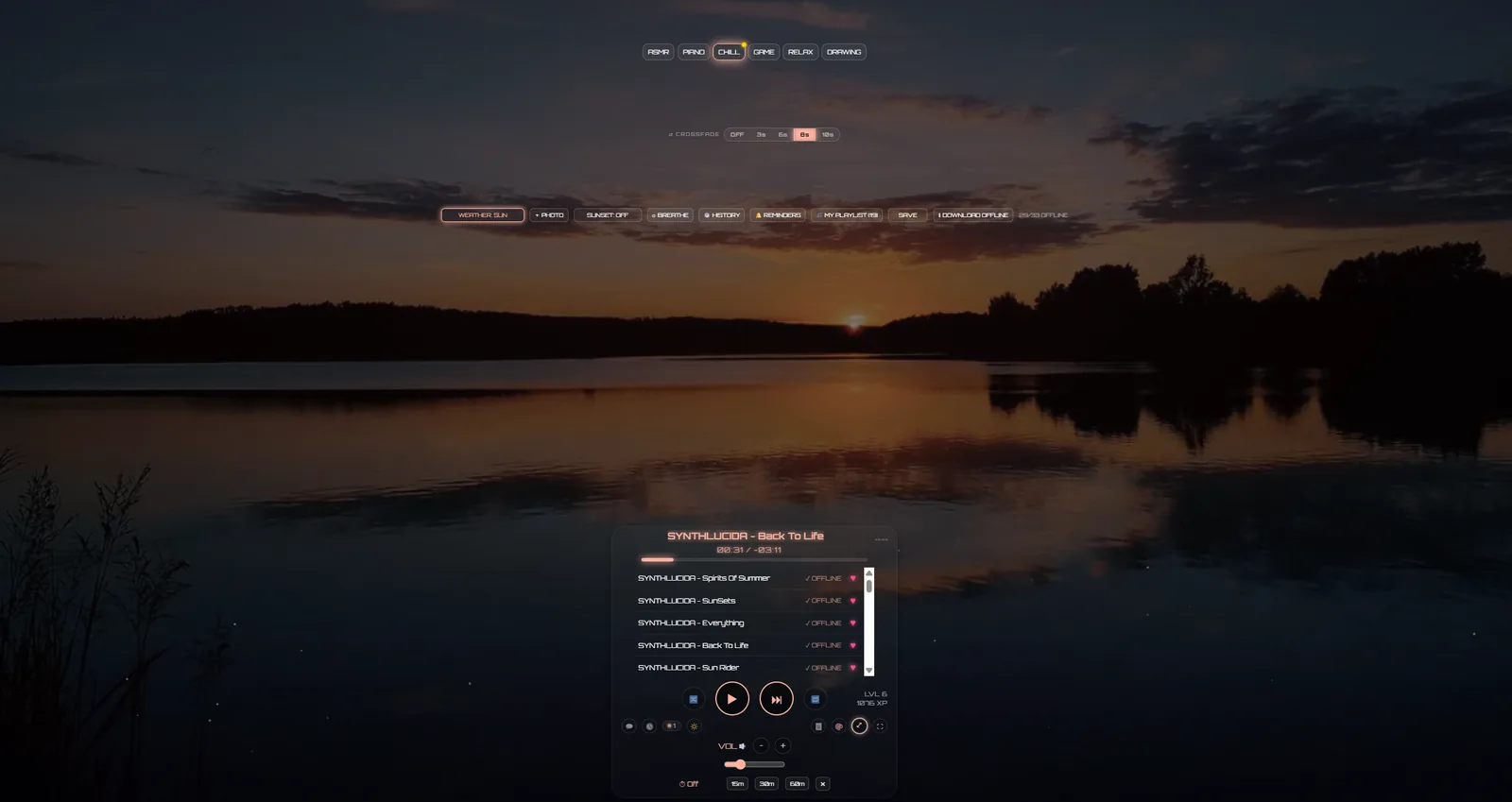
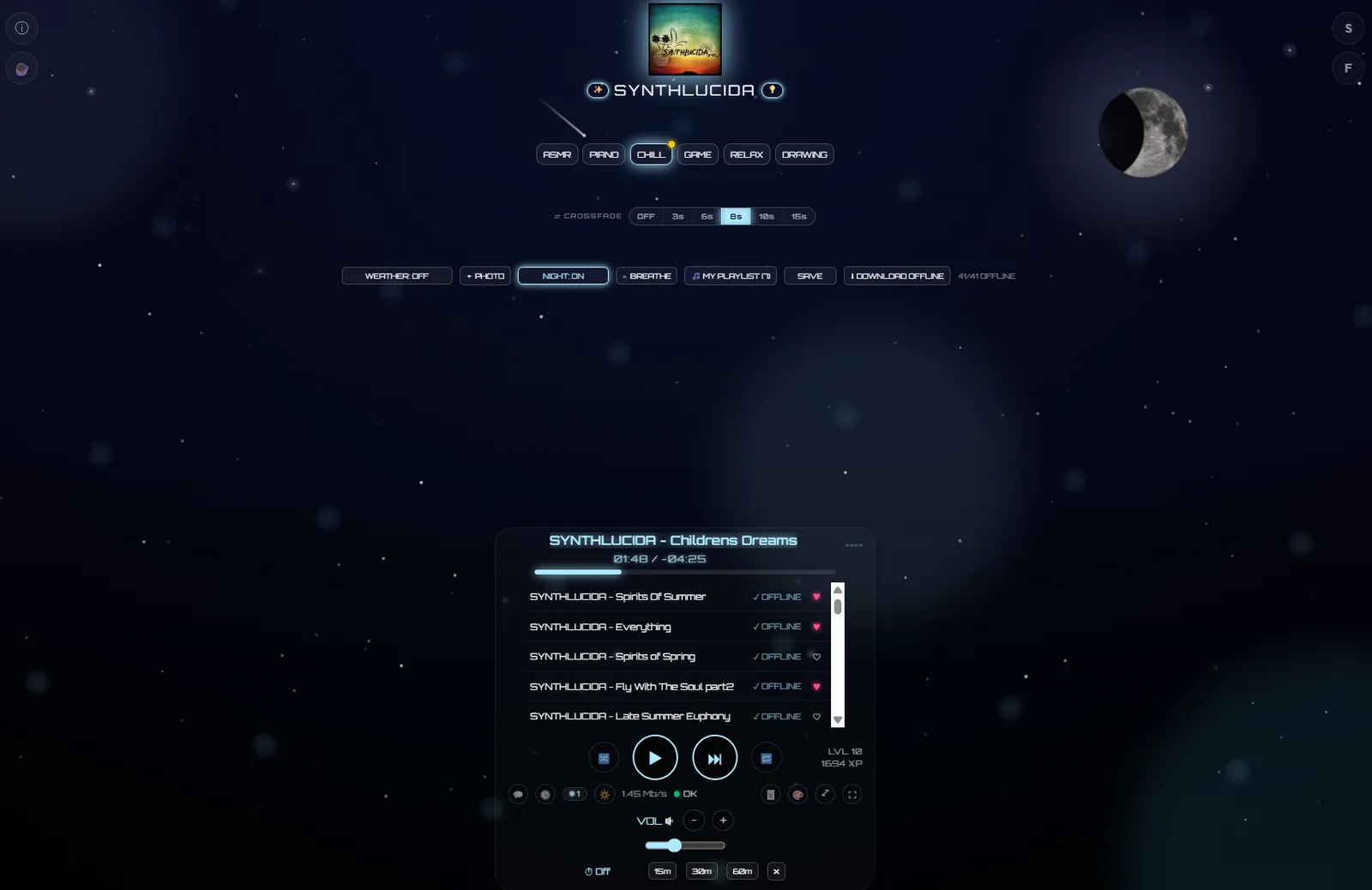
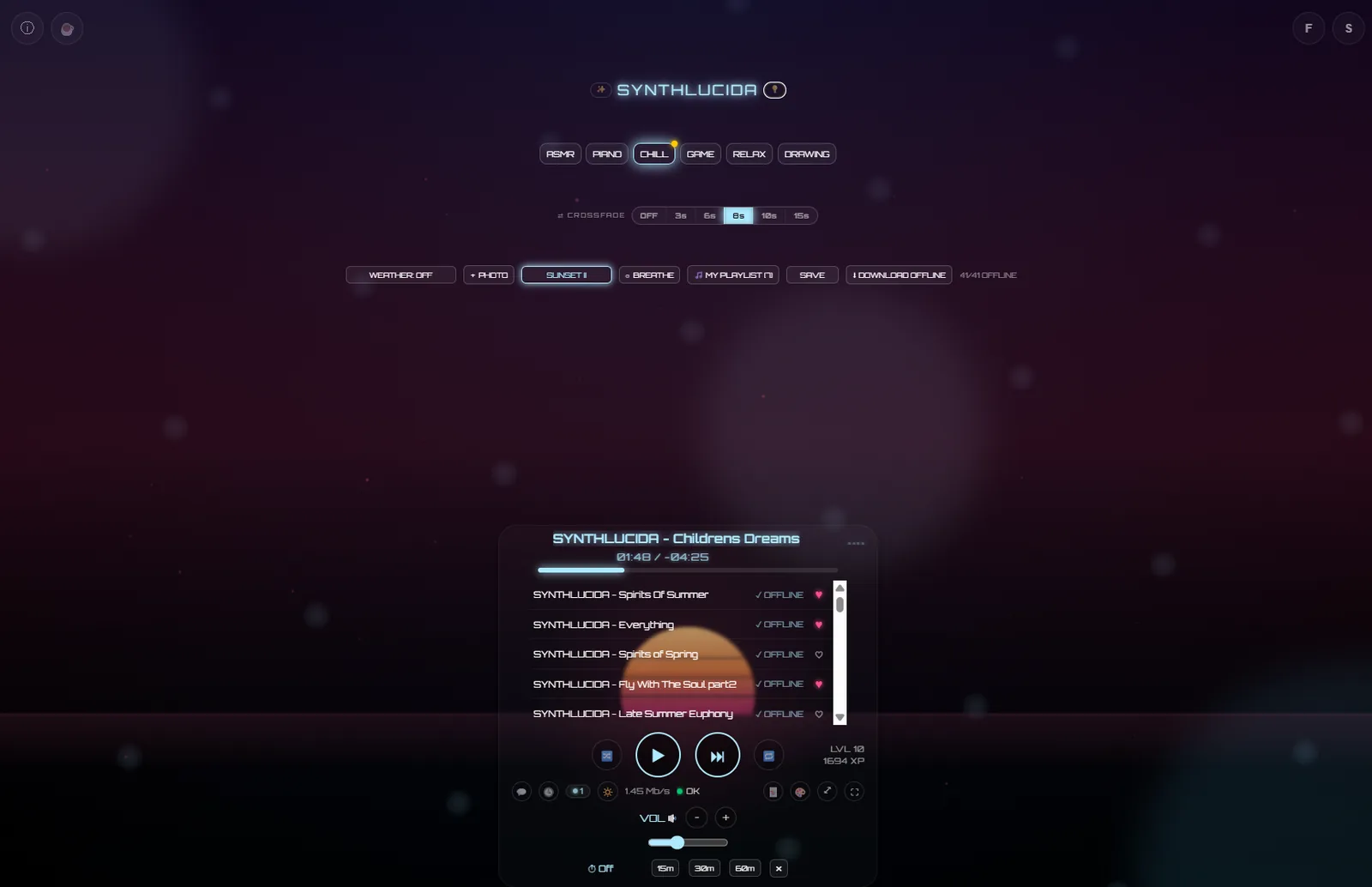
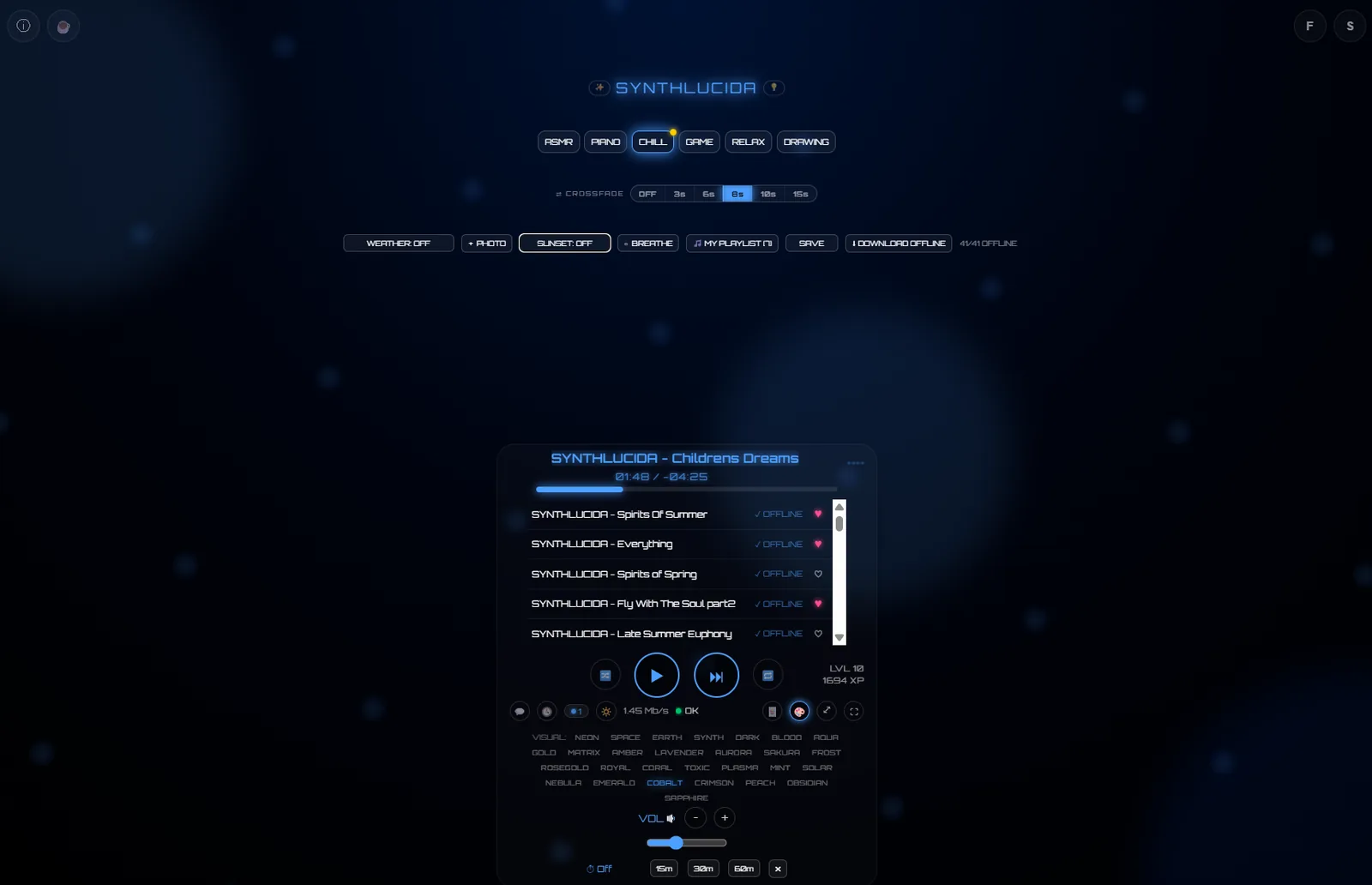
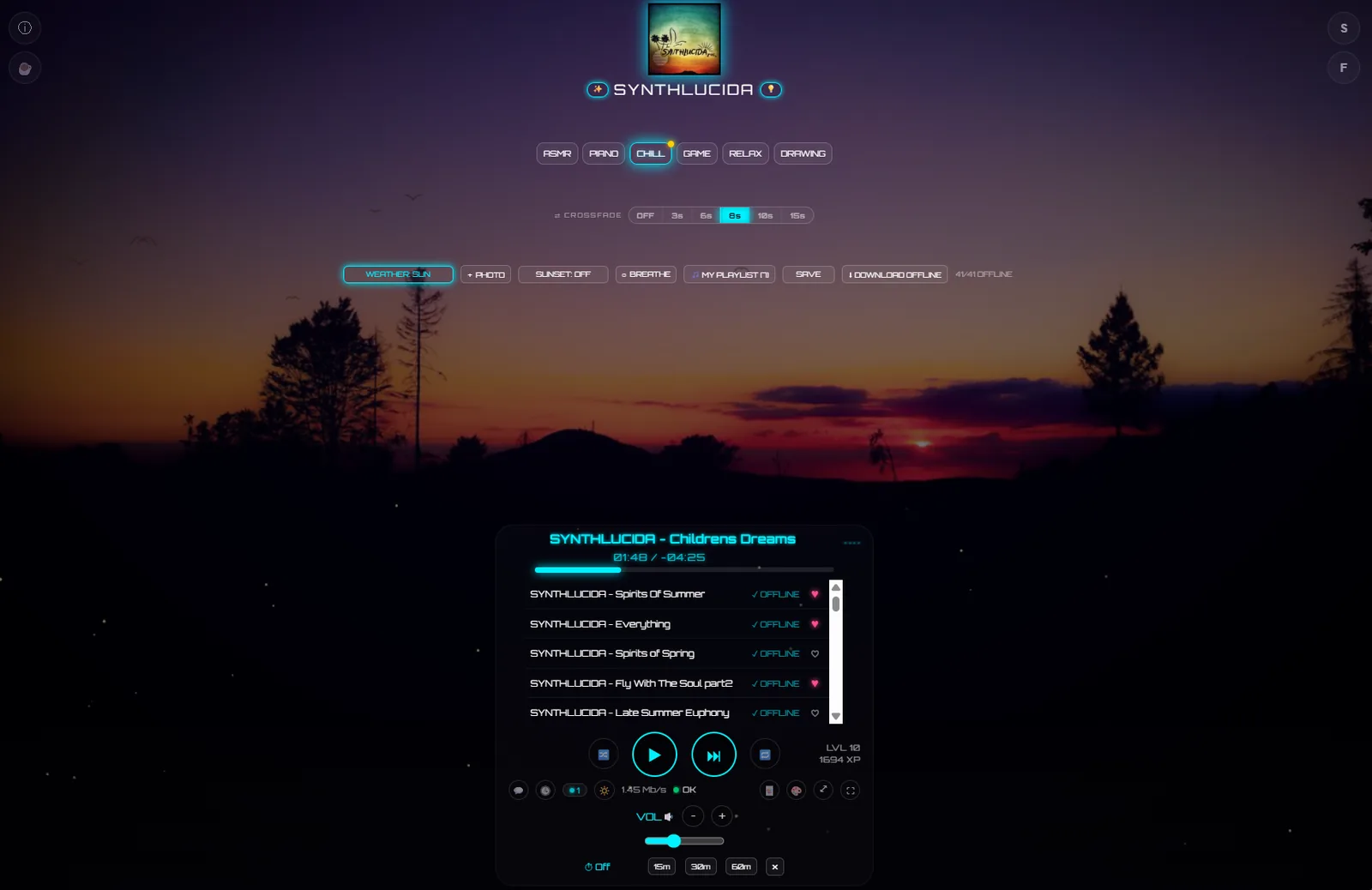
What is on screen while music plays can shape how relaxing a session feels, even for someone not actively looking at it. A bright, busy interface with strong contrast can work against a calm soundscape, while a darker, low-contrast theme tends to sit more quietly in the background. That is one reason RelaxPlayer offers a range of visual themes, including sunset and night sky modes, so the screen can match the mood of the sound.